
PLA vs PETG vs TPU: Which Filament Is Right for Your Part?
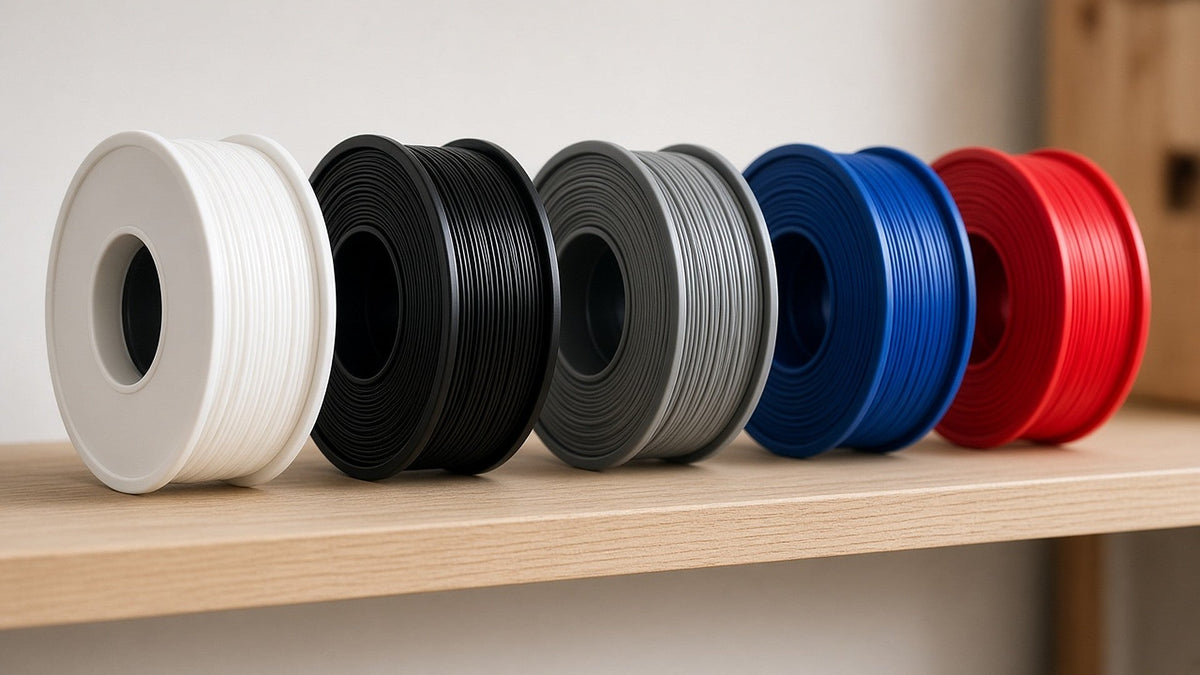
Short answer: choose PLA for detailed models, prototypes and display pieces; PETG for functional parts that need toughness or some heat and moisture resistance; and TPU for parts that must flex, grip or absorb impact. All three are FDM filaments, and the right pick depends on how your part will be used, not just how it looks.
At Obsess3D Printing we print with FDM (fused deposition modeling) on Bambu Lab and Snapmaker printers, and PLA, PETG and TPU cover most of the jobs we see. This guide explains what each material is good at, where it falls short, and the questions to ask before you order.
What is PLA best for?
PLA (polylactic acid) is the most common 3D printing filament. It prints with sharp detail, smooth surfaces and very little warping, which makes it a great choice for:
- Early prototypes where you are checking size, shape and fit
- Display models, architectural models and props
- Signs, logos, desk accessories, décor and gifts
- Jigs and templates that won't see heat or heavy loads
PLA is stiff, so it holds its shape well, but it can crack instead of bending when overloaded. Its biggest weakness is heat. PLA starts to soften at relatively low temperatures, so it is a poor choice for parts that sit in a hot car, near a heater or outdoors in direct summer sun.
What is PETG best for?
PETG is a close cousin of the plastic used in drink bottles. Compared with PLA, it is tougher, handles more heat and resists moisture better. It tends to flex a little before it breaks instead of snapping. That makes PETG a strong all-around choice for:
- Functional parts such as brackets, clips, mounts and hooks
- Enclosures and covers for electronics
- Replacement parts for household items and equipment
- Parts used outdoors or in damp places
The tradeoffs: PETG surfaces can be slightly glossier and fine details a little softer than PLA. For most functional parts, that is a fair trade for the extra toughness.
What is TPU best for?
TPU (thermoplastic polyurethane) is a flexible, rubber-like filament. It bends, stretches and springs back, and it absorbs impact well. Choose TPU when the part needs to:
- Grip, seal or cushion, such as gaskets, feet, bumpers and grips
- Protect something, such as covers, cases and edge guards
- Flex repeatedly without cracking
TPU is not the right choice for parts that must stay rigid or hold a precise shape under load. It also prints more slowly than PLA or PETG, which can affect price and turnaround on larger jobs.
How do I choose between PLA, PETG and TPU?
Start with how the part will be used. These questions usually point to the right material:
- Does it need to bend or absorb impact? If yes, TPU.
- Will it get warm, live outdoors or carry a load? If yes, PETG is usually the safer choice.
- Is it mainly about appearance, detail or checking fit? PLA is often the best value.
When you request a quote, tell us where the part goes and what it does. We will suggest a material in your quote, and if you are unsure, we can make a test print or prototype before a larger run.
Quick comparison
| Material | Strengths | Watch out for |
|---|---|---|
| PLA | Fine detail, stiff, wide color range, good value | Low heat resistance, can crack under load |
| PETG | Tough, better heat and moisture resistance, slight flex | Slightly less crisp detail than PLA |
| TPU | Flexible, impact-absorbing, good grip | Not rigid, slower to print |
What about other materials?
PLA, PETG and TPU handle the majority of everyday parts. If your project calls for something else, mention it when you ask for a quote and we will let you know what we can do.
FAQ
Is PETG stronger than PLA?
PETG is tougher than PLA. It flexes a little before breaking and handles heat and moisture better, so it usually lasts longer in functional parts. PLA is stiffer and prints finer detail, so it remains a great choice for models and prototypes.
Can PLA parts be used outdoors?
PLA can soften in high heat, so it is not ideal for parts left in direct summer sun or hot cars. For outdoor use, PETG is usually the better FDM option.
When should I use TPU?
Use TPU when the part needs to bend, grip, seal or absorb impact, such as gaskets, bumpers, grips and protective covers.
Can you help me pick a material?
Yes. Tell us how the part will be used when you request a quote and we will recommend a material.
Get a quote for your part
Send your STL file and we'll reply with a price within 48 hours. We ship anywhere in the U.S.